Investment Recordkeeping: What Documents to Keep and for How Long
Investment recordkeeping explained: which documents prove your cost basis, how long to keep them, and a simple yearly routine you can sustain.
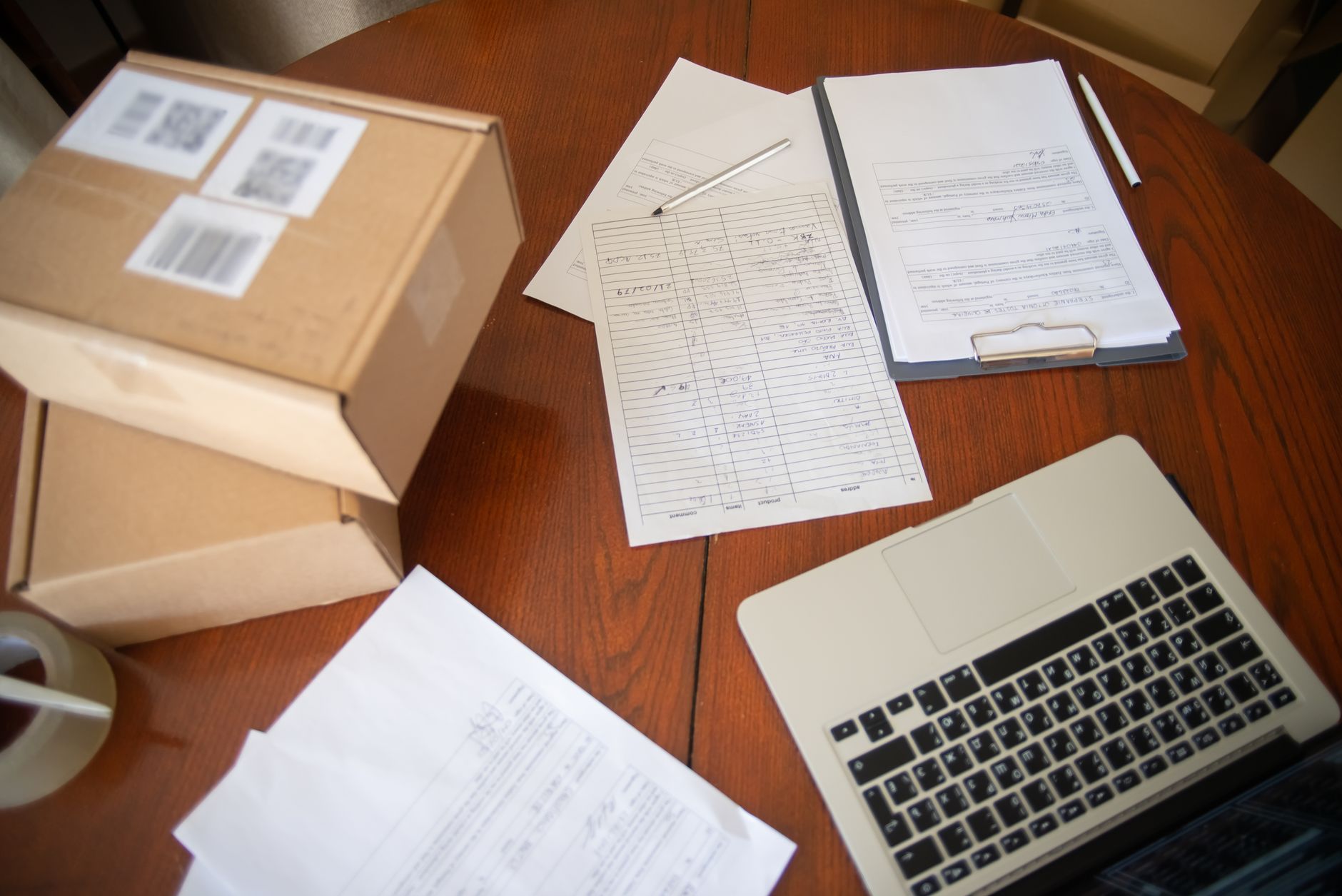
Photo: Kampus Production / pexels
Alpha Sentinel is a software platform, not a registered investment adviser. This article is educational, not investment advice. Full disclaimer at the end of this post.
It is a Sunday evening in March, and the accountant's request sits in your inbox: cost basis for every position you sold last year, plus the purchase dates. You open the brokerage portal, find half of what you need, and realize the rest lives in a folder of old emails, a retired login, and a statement from an account you transferred two years ago. Investment recordkeeping comes down to keeping the documents that prove what you paid, when you paid it, and what you did with it, and holding them for as long as they can matter to a tax return, a transfer, or an estate.
Key Takeaways
- The documents that matter most are trade confirmations, year-end tax forms, records of reinvested distributions, and anything that establishes cost basis.
- Basis records often need to outlast the position itself, because they are used when you sell, sometimes years or decades later.
- A common rule of thumb is to keep tax-supporting records for at least three years after filing, with basis records kept longer; a tax professional can confirm what applies to you.
- Brokerage portals do not always keep full history after a transfer, a merger, or an account closure, so your own copies matter.
- A simple folder structure and one annual filing session beat an elaborate system you stop maintaining.
Why Gaps in Your Records Cost Real Money
The practical cost of a missing document is rarely dramatic on the day you lose it. It shows up later, when you sell a position and cannot prove what you paid for it. Without a documented basis, you may be left reconstructing history from memory or from partial statements, and a reconstructed number is harder to defend than a documented one.
Busy professionals are especially exposed to this. Accounts accumulate across employers, rollovers, and brokerages. A physician who changed practices twice or an attorney who moved between firms may have retirement plans, equity compensation, and taxable accounts spread across several custodians. Each transition is a place where history can thin out. Account numbers change, paperwork is mailed to an old address, and the online archive on the old platform quietly expires.
There is also the matter of timing. Records feel unimportant when nothing is happening and become urgent all at once: at tax time, during a divorce or an estate settlement, or when a lender or regulator asks a question. Building the archive in the middle of that pressure is slow and expensive. Building it in small increments, when nothing is at stake, takes almost no effort.
Why Most Record-Keeping Habits Fail
Most people do not fail at recordkeeping because they do not care. They fail because the system depends on a mood. The plan is to file everything later, and later arrives with a backlog.
Three patterns repeat. First, reliance on the portal: the assumption that the brokerage will have the document in every period. Portals generally retain a limited window of statements online, and the retention window varies by institution. Second, scattering: confirmations in email, tax forms in a drawer, spreadsheets on a laptop that was replaced. Third, over-engineering: a color-coded scheme that takes an hour a week and collapses by February.
The common thread is that the process asks too much at the moment of friction. A durable system does the opposite. It asks for very little, on a fixed schedule, and it stores files where you and the person who would one day settle your affairs can both find them.
Step One: Know Which Documents Matter
Start with a short list rather than an exhaustive one. Most investors need to hold on to a handful of categories:
- Trade confirmations showing date, quantity, and price for each purchase and sale.
- Year-end tax documents issued by custodians, including consolidated forms and any corrected versions.
- Records of reinvested dividends and distributions, since each reinvestment can create a new basis entry.
- Documents that adjust basis, such as corporate action notices for splits, mergers, and spin-offs.
- Account-opening, transfer, and rollover paperwork that shows where an asset came from.
Monthly or quarterly statements are useful for reconciliation, but the confirmations and year-end forms usually carry the facts you will actually need. If you hold shares acquired through an employer, add grant and vesting documents to the list, because they affect how the shares are reported.
Step Two: Match Each Document to a Retention Period
Retention is where people either panic or ignore the question. A sensible way to think about it is to separate documents by what they support.
Records that support a particular year's tax return are commonly kept for at least a few years after that return is filed, and some people keep them longer as a matter of habit. Records that establish basis are different, because they support a future sale, not a past filing. The basis document for a position you bought a long time ago is potentially live for as long as you own it, plus the period during which the sale could be questioned. In practice that means keeping purchase confirmations and basis adjustments until well after the position is gone.
For most investors, a simple internal rule works: keep basis records for the life of the holding plus the same multi-year window you use for tax returns, and keep year-end forms for the same multi-year window. If that sounds conservative, it is, and the cost of storing a PDF is close to zero. Whether a longer or shorter window is appropriate for you is a question for a qualified professional who knows your situation.
Step Three: Build a System You Can Keep Up, With an Illustrative Year
A workable system needs three things: one location, one naming convention, and one recurring appointment. The following is an illustrative year, not a prescription, to show how little time it can take.
In January, as tax forms arrive, you save each one into a folder named for the tax year, using a consistent pattern such as the institution, the account type, and the form. In the same sitting you download the prior year's trade confirmations for any account where you made changes and file them in a second folder organized by account. In April, after filing, you note on a single page which documents supported the return and where they live. In the autumn, you spend twenty minutes checking that every account you hold still has its most recent statements saved somewhere you control, since this is when portal retention windows start to bite.
Two additions make the system durable. First, keep a one-page index listing each account, the custodian, the approximate opening date, and where its documents sit. Second, store the archive in two places, such as an encrypted cloud folder and an external drive, so that a lost laptop does not erase years of history. Finally, make sure a spouse, an executor, or a trusted advisor knows the index exists. A perfect archive that nobody else can locate fails at the moment it matters most.
The whole routine is about three sessions a year. That is a small price compared with reconstructing a decade of history under a deadline.
Frequently Asked Questions
How long should I keep investment records?
Keep tax-supporting records for at least several years after the return is filed, and keep basis records until well after you have sold the position. Because retention needs vary with your holdings and circumstances, confirm the right window with a qualified tax professional.
Can I rely on my brokerage to keep my records?
Not entirely. Brokerages generally keep some history online, but the available window varies, and transfers, mergers, and account closures can leave gaps. Saving your own copies of confirmations and year-end forms removes that dependency.
What should I do if I cannot find old cost basis information?
Start by requesting historical statements and confirmations from the current and former custodians, since many can supply older documents on request. If gaps remain, a tax professional can advise on how to document the basis from the best available evidence.
Do I need to keep paper copies?
Not necessarily. Clear, complete digital copies are what most people use in practice, but whether a particular situation calls for originals is a question for your tax or legal professional.
How The Shield works
On weekdays from 4:00 AM to 8:00 PM ET, The Shield checks the stocks on your watchlist every few minutes, using prices delayed about 15 minutes. When one of them moves into downward momentum below its moving average, it emails you what changed and the price. Alerts are informational, not recommendations, and may be delayed or missed.
If you manage your own holdings around a demanding schedule, the 7-day pass for The Shield from Alpha Sentinel is where we would suggest you begin. We watch. We alert. You decide.
The ShieldYour watchlist, watched during market hoursStart your 7-day pass$29 today. Your subscription renews automatically at $249/month after the 7-day trial unless canceled before renewal. Cancel in account settings.
FULL DISCLAIMER: Alpha Sentinel is a software platform that provides informational tools, including market scans and position-monitoring outputs. Alpha Sentinel is not a registered investment adviser, broker-dealer, certified public accountant, financial planner, or law firm. Nothing on this page or produced by the platform constitutes investment, tax, legal, or accounting advice; an offer or solicitation to buy or sell any security; or a personalized recommendation of any kind. The platform is not a substitute for the services of qualified professionals, and nothing in this article should be read as a recommendation that any reader manage their portfolio without professional guidance. All investments involve risk, including the risk of total loss of principal. Tax treatment depends on the user's individual circumstances and applicable law; consult a qualified tax professional regarding any tax-related question. The output of any software filtering or monitoring rule is not a prediction of future market behavior, and no software tool can be relied upon to warn users in advance of losses or to prevent losses. Past performance, whether of any security, strategy, or software signal, does not guarantee future results. Alpha Sentinel does not publish or warrant any hit rate, win rate, or similar performance metric, and users should not infer any such metric from the platform's outputs.
Frameworks, examples, schedules, and references to user types in this article are illustrative only and are not representations of typical results. Notification delivery times and service availability depend on third-party systems and may be subject to delays, errors, or failures.
Related Posts
Sequence-of-Returns Risk: Why the Timing of Losses Matters in Retirement
Why the order of returns matters once you start withdrawing, and the six stages for planning around a poor start to retirement.
Oct 13, 2026
Delisting Explained: What Happens to Your Shares
Delisting explained in five stages: why stocks leave an exchange, where shares trade next, and what happens to your ownership and records.
Oct 13, 2026
New Issues and IPOs: Why First-Day Pops Mislead Individual Investors
Why first-day IPO jumps mislead individual investors, how offering prices are set, and what to read and watch before buying a new issue.
Oct 13, 2026