Stagflation Explained: Why Slow Growth and High Inflation Hurt Portfolios
Stagflation pairs stalled growth with rising prices. Here is what causes it, why it strains both stocks and bonds, and how investors think about it.
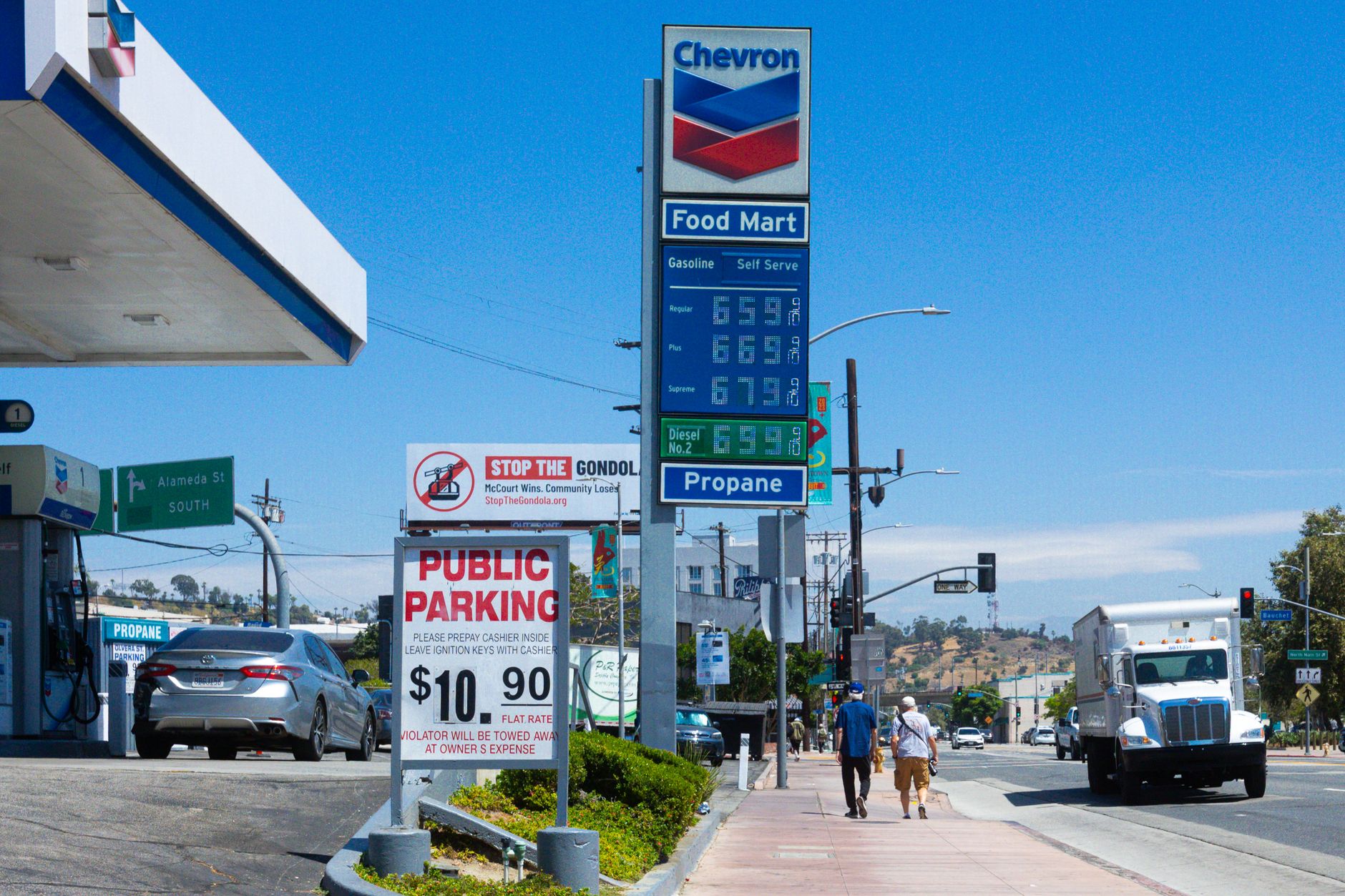
Photo: David Brown / pexels
Alpha Sentinel is a software platform, not a registered investment adviser. This article is educational, not investment advice. Full disclaimer at the end of this post.
You are filling the car on a Friday evening, glancing at a price per gallon that is higher than last month, and the news on the radio mentions that hiring has stalled. Prices rising while the economy stops growing is the signature of stagflation, and it is unusual because the two problems normally pull in opposite directions. It hurts portfolios because the tools that usually help with one problem make the other worse, and because stocks and bonds, which often cushion each other, can both come under pressure at once.
Key Takeaways
- Stagflation is the combination of slow or negative growth, elevated unemployment and persistent inflation at the same time.
- It is hard for central banks to fight, because raising interest rates to curb prices can deepen a slowdown.
- The 1970s is the standard historical example, and the episode ended only after very high interest rates in the early 1980s.
- Inflation erodes the purchasing power of fixed income and can squeeze company profit margins, so the usual stock and bond pairing may not offer its usual cushion.
- Understanding the mechanics helps you review your own holdings calmly, and it does not tell you what any market will do next.
1. Understand What the Word Actually Means
The word stagflation joins stagnation and inflation. It describes an economy in which output is flat or shrinking, unemployment is rising or stubbornly high, and the general level of prices keeps climbing. A British politician, Iain Macleod, used the term in Parliament in 1965 to describe a combination that conventional thinking said should not occur.
The reason that mattered is a long-standing view in economics that inflation and unemployment tend to move in opposite directions, an idea associated with the Phillips curve. In a typical slowdown, demand weakens, unemployment rises and price pressure eases. Stagflation breaks that pattern. There is no single official threshold for it, and economists argue about when a given period qualifies, so treat the word as a description of a condition rather than a formally declared event.
2. Look at How It Starts
Stagflation usually involves a supply shock, an event that raises the cost of producing things without a matching rise in demand. The oil embargo of 1973 is the textbook case: energy prices jumped, costs flowed through to nearly everything, and businesses cut back at the same time that consumers faced higher prices. A second oil shock followed later in the decade.
Policy can contribute. Economists often point to loose monetary policy and expectations of continued inflation as ingredients that let price rises become entrenched. Once households and businesses expect prices to keep rising, they build that expectation into wages and contracts, which keeps inflation going even as growth weakens. The mix of causes is still debated, and no two episodes are identical, so it is better to hold the historical story loosely than to treat it as a template.
3. Recognize Why Central Banks Struggle With It
A central bank normally has one main lever, the level of short-term interest rates. Raising rates cools demand and reduces inflation, but it also slows hiring and investment. Lowering rates supports growth, but it can feed inflation. In stagflation the two goals conflict, because easing to help a weak economy risks higher prices, while tightening to restore price stability risks a deeper downturn.
The period of the late 1970s and early 1980s illustrates the dilemma. The U.S. Federal Reserve under Chairman Paul Volcker pushed short-term rates to very high levels to break inflation, and the economy went through painful recessions before price growth fell. The takeaway is not a rule about what any central bank will do next time, only that the trade-off is real and the path out can be uncomfortable.
4. See Why Both Stocks and Bonds Can Struggle
Investors often rely on the idea that stocks and bonds balance each other: when growth worries rise and stocks fall, high-quality bonds frequently gain. Inflation shocks can scramble that relationship. When prices rise, the fixed payments from a conventional bond buy less over time, and rising interest rates reduce the market value of existing bonds. Stocks face their own pressure, including higher input costs, squeezed profit margins and lower valuations when investors apply higher discount rates to future earnings.
Several specific channels are worth knowing:
- Real returns: a return that looks acceptable on paper can be small or negative after subtracting inflation.
- Margins: companies that cannot pass higher costs on to customers see profits shrink.
- Valuation: higher interest rates tend to weigh on stocks priced for distant earnings.
- Correlation: the cushion that bonds usually provide may be weaker than in past slowdowns.
This is a description of mechanisms that have appeared in past episodes, not a prediction about the next one.
5. Review the Tools Investors Discuss, Without Treating Any as a Fix
Investors and professionals commonly discuss a handful of approaches in an inflationary environment. Treasury Inflation-Protected Securities, which adjust principal with a consumer price index, are designed to address the purchasing-power problem in bonds. Real assets such as commodities and real estate have historically been discussed as having some link to price levels. Companies with strong pricing power, meaning the ability to raise prices without losing customers, are often cited as more resilient than those without it. Holding shorter-maturity bonds reduces sensitivity to rising rates.
None of these is a guaranteed shield, and each has its own risks, costs and periods of poor performance. Whether any of them belongs in a particular portfolio depends on goals, time horizon and taxes, which is a conversation for a qualified professional. Working with an advisor and self-directing are both legitimate approaches. Either way, diversification across different sources of return generally matters more than any single bet on an economic outcome.
6. An Illustrative Week: A Calm Review During a Price Squeeze
The following is an illustration, not a record of results or a forecast. Imagine an executive who notices that grocery prices, rent and insurance premiums have all risen faster than her raise. On Sunday she lists her holdings and next to each writes what role it plays: growth, income, ballast, or cash for near-term needs.
On Tuesday she checks the interest rate on her cash and the maturity of any bonds. On Thursday she reads the inflation and employment releases published by the Bureau of Labor Statistics and notes, in plain words, what they changed about her view of the economy. By the weekend she decides one thing: whether anything about her plan needs a conversation with her advisor, or whether the existing plan still fits her situation. She makes no rush decision, and she records the date she will look again. The exercise does not predict markets. It simply gives a stressful economic story a structure and keeps every decision in her hands.
Frequently Asked Questions
What is an example of stagflation?
The United States in the 1970s is the classic example, when oil price shocks coincided with weak growth, elevated unemployment and high inflation. The Federal Reserve's high interest rates in the early 1980s are generally credited with bringing inflation down, at the cost of recessions.
Is stagflation the same as a recession?
No. A recession is a broad decline in economic activity, while stagflation specifically combines weak growth with high inflation. A recession can occur with falling or low inflation, and stagflation may involve slow growth without a formally declared recession.
Do stocks go down during stagflation?
They can, and in the 1970s stock returns were weak once adjusted for inflation, though results varied across sectors and years. Pressure on profit margins and higher interest rates are common explanations, but each episode differs and past patterns do not predict future ones.
How do investors protect against stagflation?
There is no complete protection. Common discussion points include inflation-linked bonds, shorter-duration holdings, real assets and companies with pricing power, each with its own costs and risks. A qualified professional can help weigh them against your own goals.
How The Shield works
On weekdays from 4:00 AM to 8:00 PM ET, The Shield checks the stocks on your watchlist every few minutes, using prices delayed about 15 minutes. When one of them moves into downward momentum below its moving average, it emails you what changed and the price. Alerts are informational, not recommendations, and may be delayed or missed.
When markets turn on news you cannot follow from your desk, the 7-day pass for The Shield from Alpha Sentinel is where to start. We watch. We alert. You decide.
The ShieldYour watchlist, watched during market hoursStart your 7-day pass$29 today. Your subscription renews automatically at $249/month after the 7-day trial unless canceled before renewal. Cancel in account settings.
FULL DISCLAIMER: Alpha Sentinel is a software platform that provides informational tools, including market scans and position-monitoring outputs. Alpha Sentinel is not a registered investment adviser, broker-dealer, certified public accountant, financial planner, or law firm. Nothing on this page or produced by the platform constitutes investment, tax, legal, or accounting advice; an offer or solicitation to buy or sell any security; or a personalized recommendation of any kind. The platform is not a substitute for the services of qualified professionals, and nothing in this article should be read as a recommendation that any reader manage their portfolio without professional guidance. All investments involve risk, including the risk of total loss of principal. Tax treatment depends on the user's individual circumstances and applicable law; consult a qualified tax professional regarding any tax-related question. The output of any software filtering or monitoring rule is not a prediction of future market behavior, and no software tool can be relied upon to warn users in advance of losses or to prevent losses. Past performance, whether of any security, strategy, or software signal, does not guarantee future results. Alpha Sentinel does not publish or warrant any hit rate, win rate, or similar performance metric, and users should not infer any such metric from the platform's outputs.
Frameworks, examples, schedules, and references to user types in this article are illustrative only and are not representations of typical results. Notification delivery times and service availability depend on third-party systems and may be subject to delays, errors, or failures.
Related Posts
Sequence-of-Returns Risk: Why the Timing of Losses Matters in Retirement
Why the order of returns matters once you start withdrawing, and the six stages for planning around a poor start to retirement.
Oct 13, 2026
Delisting Explained: What Happens to Your Shares
Delisting explained in five stages: why stocks leave an exchange, where shares trade next, and what happens to your ownership and records.
Oct 13, 2026
New Issues and IPOs: Why First-Day Pops Mislead Individual Investors
Why first-day IPO jumps mislead individual investors, how offering prices are set, and what to read and watch before buying a new issue.
Oct 13, 2026